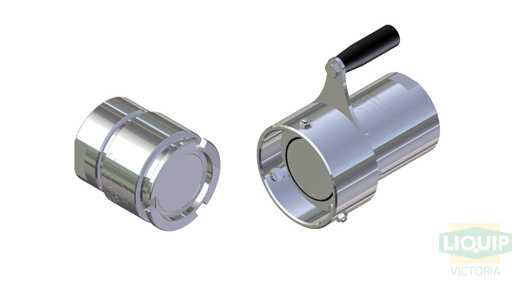
Dry Break Couplings

  • Sort By
  • Page:
Displaying to (of itemsitems)

Liquip Victoria offers the most comprehensive line of Dry-break (also known commonly as Dry-disconnect) couplings in the industry. 


Our line of dry disconnects include SAS Dry-Breaks, Drylok™, Kamvalok® and Epsilon®, all suitable for a broad range of hazardous liquid applications.

Dry-break couplings have been proven as a successful technology to help protect workers and the environment in the transfer of hazardous materials. Our Dry-break couplers ensure against accidental spillage of liquids.

If your product is corrosive, toxic, caustic or otherwise harmful (such as AdBlue, crude oil, shale oil, refined fuels, LPG, LNG, bio-diesel, butadiene, corn syrup) and a wide array of hazardous chemicals, our high-performance range of options can help reduce the hazards associated with the transfer of these products.

Contact the Liquip Victoria team for expert advice and assistance with these part selections or view the range via the links above.

Frequently Asked Questions

  • What is a dry-break coupling and why is it used in fuel transfer?

    A dry-break coupling is a specialised valve fitting that allows two fluid transfer lines to be connected or disconnected without any spill of liquid — the valve mechanism closes both ends of the coupling simultaneously before they separate. They are required by AS2809 for road tanker loading and unloading operations and are widely used in bulk fuel depots, aviation refuelling, and industrial fuel transfer to minimise spill risk and fuel vapour emissions.

  • What sizes of dry-break couplings does Liquip Victoria supply?

    Liquip Victoria supplies dry-break couplings in the most common sizes used in the Australian fuel industry: 2 inch, 3 inch, and 4 inch. Specific valve configurations — including male adaptors, female receivers, dust caps, and elbow fittings — are available for most standard tanker and depot inlet configurations

  • Are Liquip dry-break couplings compliant with AS2809?

    Yes. Liquip Equipment dry-break couplings supplied by Liquip Victoria are manufactured to meet the requirements of AS2809 (road tank vehicles for flammable and combustible liquids) and are widely used across the Australian tanker industry. They are compatible with standard bottom loading systems used at major fuel terminals.

  • Can dry-break couplings be used for AdBlue or other fluids?

    Dry-break couplings are primarily designed for fuel transfer but can be adapted for AdBlue (DEF) and other compatible fluids provided material compatibility is confirmed. AdBlue requires AdBlue-compatible materials (not copper or brass). Liquip Victoria can advise on the correct coupling specification for non-fuel fluid transfer applications.

  • : Does Liquip Victoria stock dry-break couplings for immediate supply?

    Liquip Victoria holds stock of the most common dry-break coupling sizes and configurations for prompt supply from our Melbourne facility. For specialist sizes or high-volume orders, lead times may apply. Contact our team to confirm availability for your specific requirement.